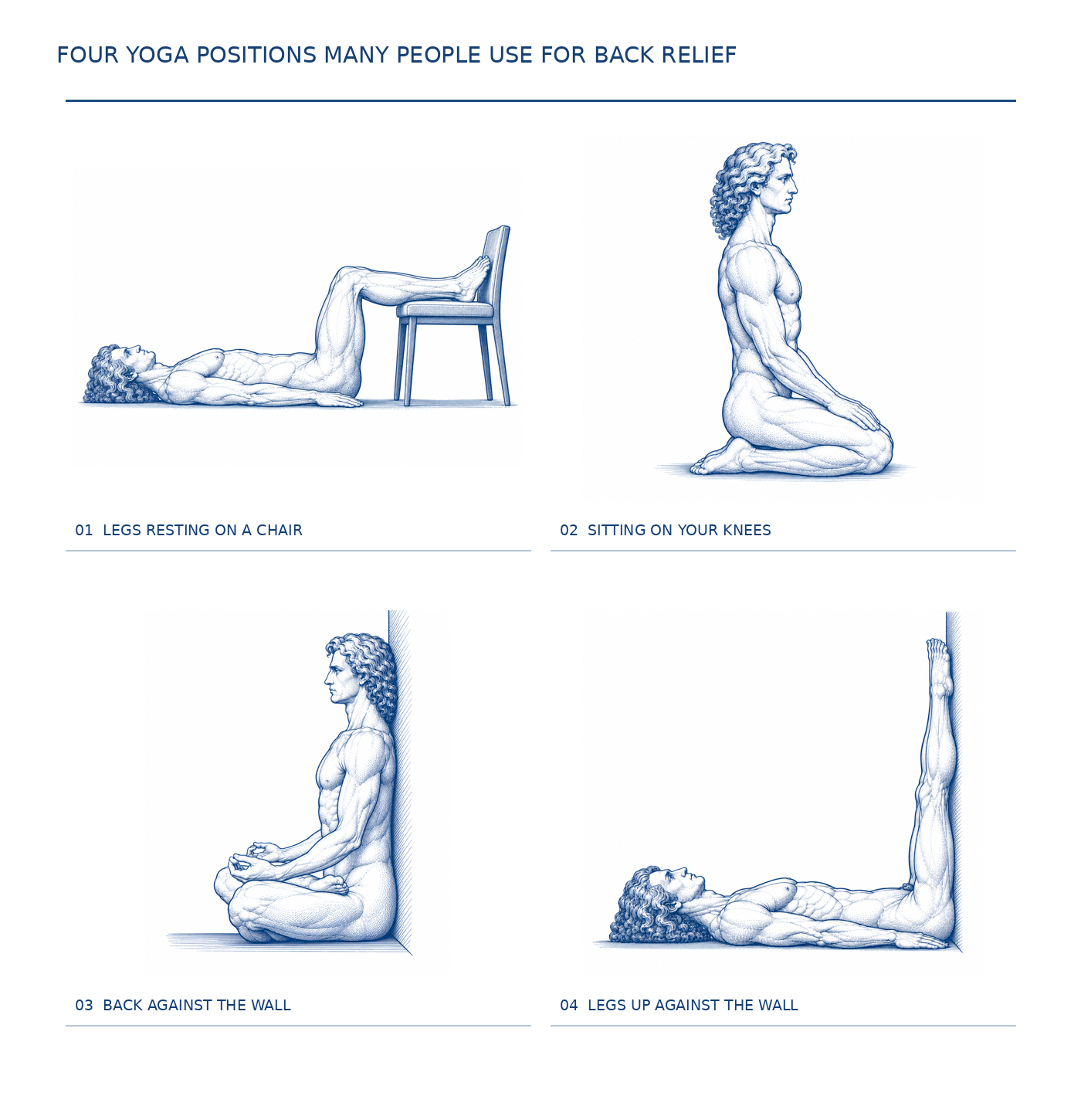
These four positions have something important in common: They change how the weight of the body is supported, allowing certain muscles of the lower back to relax and potentially reducing discomfort.
Each position changes the relationship between the spine, pelvis, hips, and legs.
Relieves lower-back tension by supporting the weight of the legs.
When lying flat on your back with your calves resting on a chair, your hips and knees are bent approximately 90 degrees.
The chair supports the weight of your lower legs.
Bending the hips and knees may reduce tension in muscles surrounding the pelvis and lower spine.
The floor supports the back, allowing the spinal muscles to relax.
This position may reduce the exaggerated inward curve of the lower back in some individuals.
Why it may work: The combination of back support and elevated legs can make it easier for the lower-back muscles to relax without having to maintain an upright posture.
Encourages an upright posture and changes the position of the pelvis.
Sitting on your heels with your back upright places the hips, knees, and spine in a different relationship than ordinary chair sitting.
Encourages awareness of spinal alignment.
Changes the position of the pelvis and lower-back curvature.
May reduce discomfort associated with prolonged sitting in one position.
Allows some people to maintain an upright torso without leaning forward.
Why it may work: Changing posture can temporarily relieve stress on tissues that have been held in one position for too long.
However, this position does not necessarily reduce spinal loading and may be uncomfortable for people with knee, hip, or lower-back problems.
Provides external support for an upright sitting position.
Sitting cross-legged with your back against a wall allows the wall to support part of your upper body's weight.
Reduces some of the muscular effort required to maintain an upright sitting position.
Encourages awareness of back and shoulder alignment.
Allows the hips and pelvis to settle into a supported position.
May reduce fatigue in the muscles responsible for maintaining posture.
Why it may work: The wall provides an external support surface, potentially allowing the back muscles to work less than they would when sitting upright without support.
The position is most comfortable when the hips have adequate flexibility; a cushion beneath the pelvis may help.
Supports the legs while allowing the back to rest completely on the floor.
Lying flat with your legs extended vertically against a wall changes the position of the hips and removes the need to support the legs actively.
The floor supports the entire back.
The wall helps support the legs.
The position may allow muscles around the hips and lower back to relax.
Elevating the legs can reduce the sensation of tiredness or heaviness in the legs.
The resting position may reduce muscular tension associated with prolonged standing or sitting.
Why it may work: The combination of supported back and elevated legs provides a restful position that may reduce muscular effort and improve comfort.
Some people will need to move their hips farther from the wall or bend their knees slightly to avoid excessive hamstring tension.
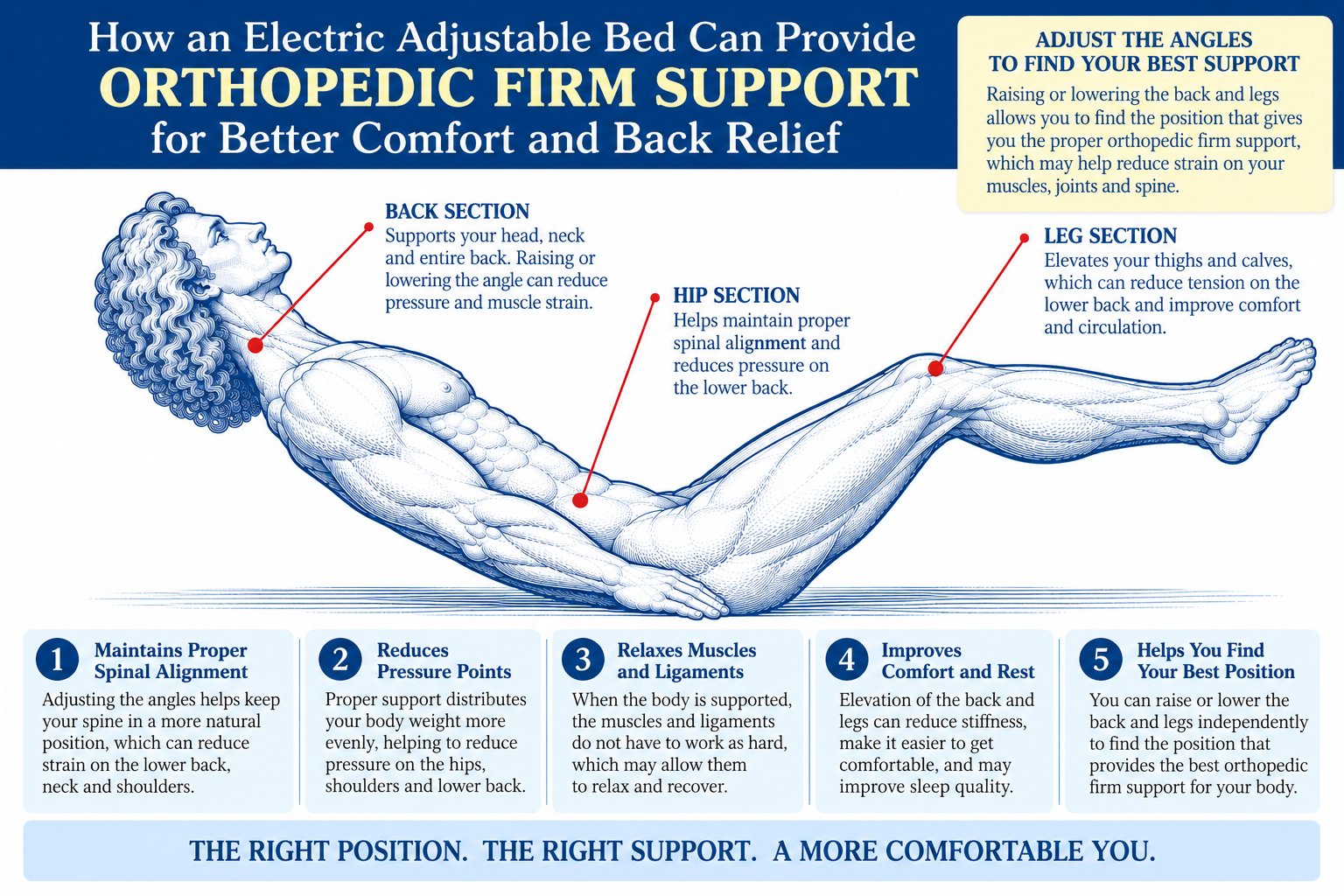
The four positions demonstrate that changing the angle of the back, hips, thighs, and legs can change muscular tension, weight distribution, and perceived pressure on the lower back.
This is particularly relevant to electric adjustable beds.
An adjustable bed allows the back and legs to be elevated independently, creating a variety of supported resting positions without requiring the person to sit on the floor or against a wall.
Even a small adjustment in elevation can change comfort. However, no single position is best for everyone, and these positions do not necessarily decompress the spine or reduce pressure on every spinal structure.
My suggested closing headline for your webpage:
The ability to adjust your back and legs independently may help you discover a more comfortable resting position for your muscles, joints, and lower back.
Safety note: These positions are not suitable for every back condition. Avoid positions that worsen pain or cause tingling, numbness, or radiating leg symptoms. New weakness or bowel or bladder changes require urgent medical evaluation.