Family Owned & Operated Since 1964Los Angeles Service: 800-551-2010
Orthopedic Adjustable Bed

907 N. Hollywood Way, Burbank, CA 91505 · 800-233-7382
1035 E. Camelback Rd., Phoenix, AZ 85014 ·
800-733-1818

Los Angeles Orthopedic Sleep Guide: 800-551-2010

How to Buy an Orthopedic Mattress and Adjustable Bed

A practical guide to balanced support, comfortable alignment and adjustable sleep positions—without promises that a mattress or bed can diagnose, treat or cure back pain.

Important medical note: Back pain is not always nerve pain. It can involve muscles, ligaments, discs, joints, inflammation, nerve irritation or pain referred from elsewhere; new, severe or persistent pain should be discussed with a qualified healthcare professional. Seek prompt care for pain with weakness, numbness, fever, major trauma, unexplained weight loss, or loss of bladder or bowel control.
Support first

Comfort begins with the body being supported—not forced into one “perfect” shape.

The goal of a well-selected mattress is to distribute body weight, support natural curves and help the sleeper avoid positions that feel strained. For a back sleeper, that often means keeping the pelvis from sinking so deeply that the midsection bows; the useful image is a relaxed, neutral version of “standing at attention,” not a rigid military posture.

3 ModelsDifferent profiles and comfort builds.
4 FirmnessesSoft, Regular Firm, Extra Firm and Ultra Firm.
3 PositionsBack, side and stomach sleepers need different support.
Medical illustration orthopedic firm mattress recommendations for the of the lumbar spine and nerves
The back is a complex system of vertebrae, discs, muscles, ligaments and nerves. Image used for educational context; see Sources.
NOTE: PRACTICE THESE POSITIONS IF YOU WANT TO RELIEVE THE STRAIN ON THE LOWER BACK. 

10-point buying guide: 800-55102919

Choosing an orthopedic mattress for back support

01 · FOUNDATION

Orthopedic Mattress Support Starts With Your Sleeping Position

A mattress should support the body differently for a back, side or stomach sleeper because each position loads the shoulders, waist, pelvis and legs in a different way. Back sleepers often benefit when the hips are supported well enough to avoid excessive sagging, while side sleepers usually need enough surface cushioning for the shoulder and hip. Stomach sleepers commonly prefer a surface that limits deep pelvic sinking, but personal comfort and medical guidance still matter.

02 · CAUSES

Orthopedic Back Pain Knowledge: Nerves Are Important, but Not the Only Cause

Nerve compression or irritation can produce shooting, burning, radiating pain, numbness or weakness, but back pain can also involve muscles, tendons, ligaments, discs, facet joints and inflammatory conditions. NIH guidance notes that several factors may interact and that sometimes no single cause is identified. A mattress cannot diagnose the source, yet comfortable support may help a sleeper avoid positions that increase strain or symptoms.

03 · ALIGNMENT

Orthopedic Alignment for Back Sleepers in Los Angeles

For a back sleeper, think of a relaxed standing posture translated onto the bed: head supported, shoulders settled, pelvis controlled and legs at ease. If the hips sink much farther than the upper body and legs, some sleepers feel that the lower back is placed in an uncomfortable curve. The right firmness is the one that provides stable support without creating hard pressure points.

04 · PERSONAL FIT

Orthopedic Firmness Is Personal—Not Simply “The Harder, the Better”

“Orthopedic” does not automatically mean extra hard, and an overly firm surface may feel uncomfortable at the shoulders, hips or other pressure-sensitive areas. Body weight, shape, preferred sleep position and sensitivity all affect how firmness feels. Testing several firmness choices is more useful than relying on one label or choosing the hardest mattress by default.

05 · MATERIALS

Orthopedic Organic Mattress Comfort and Consistent Body Support

Mattress materials influence responsiveness, temperature, surface pressure and how steadily the body is held through the night. A responsive comfort layer can contour around curves while a stronger support system helps control deeper sinking. Shoppers who prefer organic materials should also review the exact component certifications and construction rather than relying on broad marketing language alone.

06 · NATURAL

Orthopedic Natural Mattress Choices for Side, Back and Stomach Sleepers

Natural-material mattresses can be built in a range of comfort levels, so the best choice still depends on the sleeper rather than the ingredient list alone. A side sleeper may prioritize shoulder and hip cushioning, while a back or stomach sleeper may emphasize a steadier pelvis. Couples should consider the needs of both people and whether each side requires a different feel.

07 · LATEX

Orthopedic Latex Mattress Support That Responds Without Deep Sagging

Latex is often chosen for a buoyant, responsive feel that supports the body while making movement easier than in a deeply enveloping surface. The total design—including layer firmness, thickness and foundation—matters more than the material name by itself. A good in-store comparison should examine both immediate comfort and whether the midsection remains steadily supported.

08 · PRESSURE

Orthopedic Pressure Distribution and the Difference Between Support and Hardness

Support describes how well the mattress holds the body in a comfortable posture, while hardness describes how firm the surface feels. A mattress can be supportive while still offering cushioning where the body needs it. Balanced pressure distribution may reduce tossing caused by uncomfortable contact points, but it should never be represented as a cure for an underlying condition.

09 · TESTING

Orthopedic Mattress Testing: Allow Time for Your Whole Body to Settle

Lie in your normal sleep position long enough to notice the neck, shoulders, waist, lower back, hips and legs—not just the first impression. Ask whether your pelvis feels controlled, whether your shoulder can settle comfortably and whether changing positions is easy. If symptoms are position-sensitive, bring your clinician’s recommendations and compare the three mattress models in all four available firmnesses.

10 · COMPLETE SYSTEM

Orthopedic Mattress and Adjustable Bed Compatibility in Los Angeles

An adjustable base needs a mattress designed to flex repeatedly without bunching, separating from the base or losing support. Mattress thickness, materials and construction all affect how closely it follows elevated head and leg sections. The best purchase evaluates the mattress and power base together as one sleep system rather than as unrelated products.

A better fit through choice

Three mattress models. Four firmnesses in each.

01

7-Inch Profile

A streamlined, responsive mattress choice for sleepers who prefer a lower profile and direct support.

02

10-Inch Profile

A higher-profile design with additional comfort depth for a broader range of sleepers and positions.

03

12-Inch Ultimate

The deepest model, designed for a more substantial comfort system while maintaining strong underlying support.

SoftRegular FirmExtra FirmUltra Firm
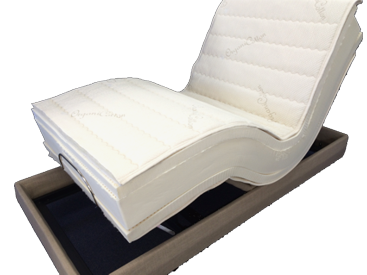
Independent head-and-leg positioning

Orthopedic adjustable beds: change the position, change the load

Raising the upper body or legs changes how body weight is distributed and may help some people find a position that feels less strained. “Zero gravity” is a consumer comfort term for a reclined posture with both head and knees elevated; it is not a medical treatment, and the exact angle should be chosen for comfort and clinician guidance.

Comfort-position concept
Head and knees elevate independently to help the user explore supportive positions.
01 · UPPER BODY

Orthopedic Adjustable Bed Head Elevation for Personalized Comfort

Elevating the upper body changes the angle at the hips and shifts pressure across the back, shoulders and pelvis. Some sleepers find a modest incline more comfortable than lying completely flat, especially when one fixed position feels strained. More elevation is not automatically better, so users should adjust gradually and stop at the position that feels naturally supported.

02 · LEGS

Orthopedic Adjustable Leg Elevation May Help the Lower Back Relax

Raising the knees can reduce the pull of the legs on the pelvis and may allow the lumbar area to rest in a flatter, more comfortable posture for some people. This is similar to placing a supportive pillow under the knees, but an electric base makes the angle easy to fine-tune. The position should not cause numbness, increased pain or circulation concerns, and medical advice should guide anyone with a significant condition.

03 · ZERO GRAVITY

Orthopedic Zero-Gravity Positioning Supports the Body From Head to Legs

With the back and legs both elevated, body weight is distributed across a broader area instead of concentrating in one region. Many adjustable-bed users call this a zero-gravity position and value it as a starting point for relaxation. It does not remove gravity or cure pain, but it can help users explore a supported, reclined posture at the touch of a button.

04 · ELECTRIC CONTROL

Orthopedic Electric Bed Positioning Makes Small Comfort Changes Easy

Electric controls allow the sleeper to raise or lower the head and feet in small increments without stacking pillows that may shift overnight. Adjustable beds share head-and-foot articulation with many hospital beds, but home adjustable beds and medical hospital beds differ in features, clearances, safety design and clinical purpose. A specialist should help match the base, mattress and accessories to the user’s mobility and transfer needs.

05 · WHOLE-BODY COMFORT

Orthopedic Adjustable Bed Comfort for Neck, Shoulders, Back, Hips and Legs

Independent positioning lets each person explore how small angle changes affect the neck, shoulders, upper back, mid-back, lower back, hips and legs. The most comfortable posture is individual and may change from reading to resting to sleeping. Electropedic helps Los Angeles customers compare positions and compatible mattress firmnesses, while medical diagnosis and treatment remain the responsibility of qualified healthcare professionals.

Local Los Angeles support

Visit the Burbank Electropedic showroom

Burbank: 907 N. Hollywood Way, Burbank, CA 91505 · 800-233-7382
Phoenix: 1035 E. Camelback Rd., Phoenix, AZ 85014 · 800-733-1818

Los Angeles County cities: directions to Burbank

Select any city for Google Maps directions to the Electropedic showroom at 907 N. Hollywood Way, Burbank, CA 91505.

Health information sources

Educational content only. This page is not medical advice and does not claim that a mattress or adjustable bed prevents, treats or cures back pain.